 Reader's Desk
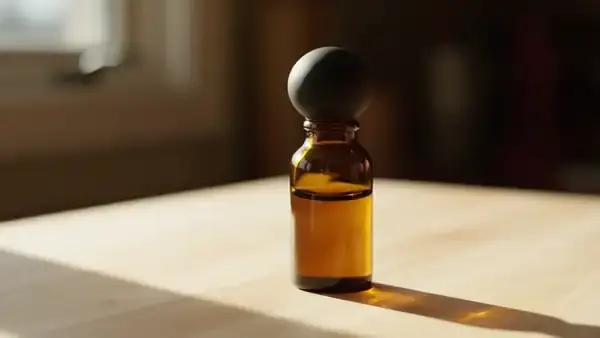
Sage Is the One Herb in This Bottle With Two Trials in People.Herb Pharm's Brain & Memory is a certified-organic liquid extract of gotu kola, ginkgo, skullcap, sage and rosemary in cane alcohol and water. The label prints one figure for all five plants, and the store's listing repeats an extraction rate as though it were the amount of a single herb.
One squeeze of the rubber bulb into two ounces of water, two or three times a day, from a one-ounce amber bottle made on a farm in southern Oregon. I did the arithmetic the label leaves out: what a squeeze weighs, what it is made from, how far each of the five plants sits from the trial that tested it, and the six places where the store's listing and the printed label do not say the same thing.

This is a paid advertisement. Sponsored by Herb Pharm, LLC.
Ellis Trumbull is the pen name of this desk.
Everything on this page about the bottle comes from the maker's own listing, the photograph of its label on that listing, its shipping and returns pages and its public review widget, all read for this article on September 20, 2026.
The customer reviews quoted further down are real and public, and the portraits beside them are illustrations, not the reviewers.
A squeeze is not a measurement.
That is the first honest thing anyone can say about this bottle, and the reason I sat down with a calculator instead of a notebook.
You buy a one-ounce amber bottle, you press a black rubber bulb once, and what comes out lands in two ounces of water.
One squeeze, twice or three times a day. How much is a squeeze?
The label answers it, quietly, in a line most people read past.
A serving is 0.7 millilitres, and 0.7 millilitres carries 646 milligrams of a certified-organic extract blend of five plants.
Five plants, one number.
No amount is printed for gotu kola, for ginkgo, for skullcap, for sage or for rosemary on their own, and none is printed anywhere else either.
So this article is arithmetic.
I took the one figure the label gives, the one equivalence it prints beside it, and the trials behind each of the five names, and I worked out how far apart they sit.
The short answer: of the five plants in this bottle, sage is the only one with two trials in people behind it, and a half teaspoon of ground sage from a kitchen rack weighs more than the dried-herb equivalent of a whole squeeze.
That is not an attack on the bottle.
It is certified organic, it is made in Oregon by a company that has been doing this since the 1970s, and its label is more honest than most that reach this desk.
It is simply what the numbers say when somebody writes them down.
One more thing before the first sum, because most of you arrived here from one of our own advertisements.
Those advertisements talk about a boxed cereal, three drinks, three foods, and three words or phrases a man ought to be able to say.
None of that is in this bottle, and I am not going to pretend it is.
It has its own section further down, the ninth sum, with the studies; the honest version of every headline we run is in the guide linked at the foot of this page.
Sum one · The squeezeWhat Comes Out of the Bulb, and Why It Is Not a Measured Dose
Here is the object itself.
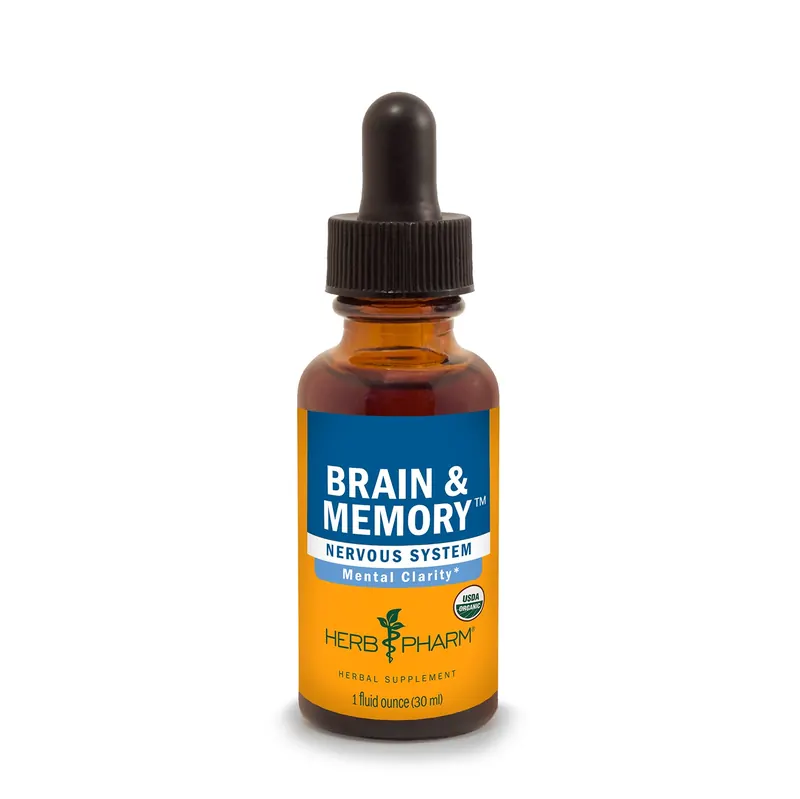
One fluid ounce of amber glass, which is thirty millilitres, with a black rubber bulb screwed into the neck.
There is a four-ounce size as well, and the reviews below tell you people wait for it.
The directions are five sentences.
Shake well before using; adults add one squeeze of the bulb to two ounces of water or juice, two or three times a day; best taken between meals.
A squeeze of a rubber bulb is not a measured dose, and nobody claims it is.
How hard you press and how full the bottle is both change what lands in the glass.
What the maker does give you is a count.
The bottle holds up to 42 servings, and a serving is 0.7 millilitres.
So the arithmetic of the bottle is simple.
Thirty millilitres divided into 0.7-millilitre servings is roughly 42, and 42 is the number the listing prints.
Now the part the listing gets wrong, and it is worth two minutes.
The maker's own pictures on the listing say the bottle is "up to a three week supply," and another picture says to take it up to three times a day.
Both cannot be true at once.
Forty-two servings, three a day. Fourteen days.
At three servings a day, 42 servings is fourteen mornings, not twenty-one.
At two a day, it is twenty-one, which is where the three-week line comes from.
So read the two lines together and you get the real answer: a one-ounce bottle is two weeks at the top of the dosing range and three weeks at the bottom.
If you are buying one bottle to give it a fair run, buy it knowing it is a fortnight.
A squeeze is 0.7 millilitres by the label, 42 squeezes to the bottle, and the honest shelf life is two weeks at three a day.
Sum two · The blend646 Milligrams for Five Plants, and the One Equivalence the Label Prints
This is the number everything else on the page hangs from.
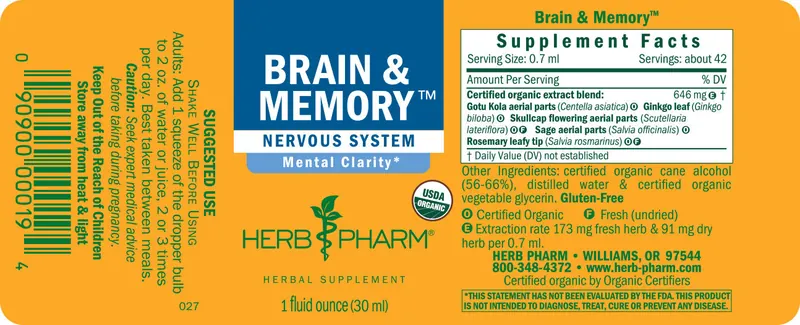
The panel prints one line where most panels print five.
Certified organic extract blend: 646 milligrams per 0.7 millilitres.
Underneath it sits the sentence that does the real work.
Extraction rate: 173 milligrams of fresh herb and 91 milligrams of dried herb per 0.7 millilitres.
Read that slowly, because it is the most useful line on the bottle and the one the store's listing mangles.
It does not say the bottle contains 173 milligrams of anything.
It says that the 646 milligrams of liquid in one squeeze were made from plant material that would weigh 173 milligrams fresh, or 91 milligrams once dried.
The rest of the 646 is what the plants were extracted into: cane alcohol, water and a little vegetable glycerin.
So the plant in one squeeze, expressed the way a kitchen would weigh it, is 91 milligrams of dried herb.
Split five ways.
Nobody knows how it is split.
The five plants are listed in order on the panel, which by convention means gotu kola is the largest share and rosemary the smallest, and that is all the order tells you.
If the split were even, each plant would be about eighteen milligrams of dried herb per squeeze.
At three squeezes a day, that is roughly fifty-four milligrams of each plant in a day, and the trials further down are measured in hundreds.
Ninety-one milligrams of dried herb, in a squeeze, shared by five plants.
I want to be fair to the method here.
A liquid extract is not the same thing as swallowing dried leaf, and a good extract pulls out compounds that a spoonful of powder would leave behind.
But when a trial gives someone 333 milligrams of a standardised extract, and a squeeze carries 91 milligrams of dried-herb equivalent shared between five plants, the gap is not a detail of technique. It is an order of magnitude.
One squeeze is made from 91 milligrams of dried herb, split five ways. That is the figure every trial below has to be read against.

Sum three · The spice rackSage Against a Half Teaspoon From the Kitchen, and the Two Trials Behind It
Now the plant this page is named for, and the reason I put it first instead of fourth.
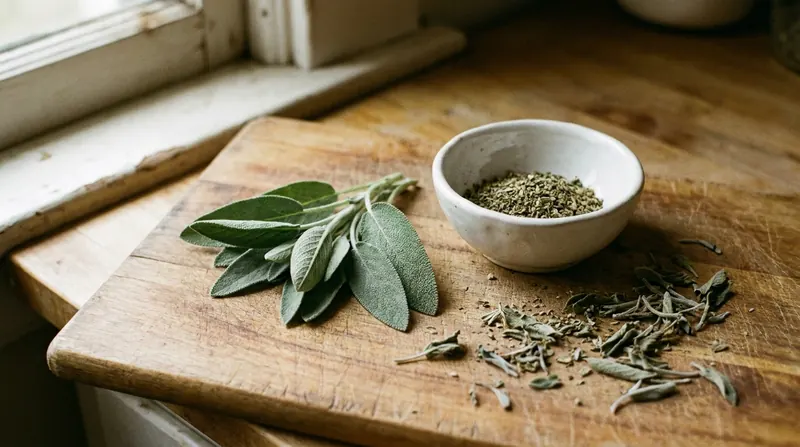
Sage is the kitchen herb in the Thanksgiving stuffing, and it is the only name on this panel with two human trials behind it that measured something about memory or attention.
The first one is the one that matters to a man over sixty-five.
Twenty healthy adults averaging seventy-three took single doses of a standardised sage leaf extract on separate days, and 333 milligrams went with better performance on memory tasks across the day and better accuracy on an attention task than the placebo. [1]
It was twenty people, it was a single dose, and the effect was measured over the hours after taking it, not over months. [1]
The dose that helped was not the biggest one tested; the effect did not rise in a straight line with the amount. [1]
The second trial used the dried leaf itself rather than an extract.
Thirty healthy young adults took single 300 and 600 milligram doses of dried sage leaf, and the 600 milligram dose went with better scores on a computerised multitasking battery. [2]
Those were adults in their twenties, not men your age, and again a single dose. [2]
The lower dose actually made people feel less alert during the task, which is the kind of detail a supplement page usually leaves out. [2]
Three hundred and thirty-three milligrams, or six hundred. Against ninety-one, shared by five.
Now put the two figures beside the bottle.
The trials used 333 milligrams of a standardised sage extract, or 300 to 600 milligrams of dried sage leaf, given as one dose.
A squeeze of this bottle is made from 91 milligrams of dried herb, of which sage is one plant out of five and, by label order, the fourth of the five.
Even if every milligram in the squeeze were sage, it would be less than a third of the dose in the older adults' trial.
And here is the comparison that put this article on the page.
One level teaspoon of ground sage weighs 0.7 grams by the United States Department of Agriculture's own food tables, which makes a half teaspoon 350 milligrams. [3]
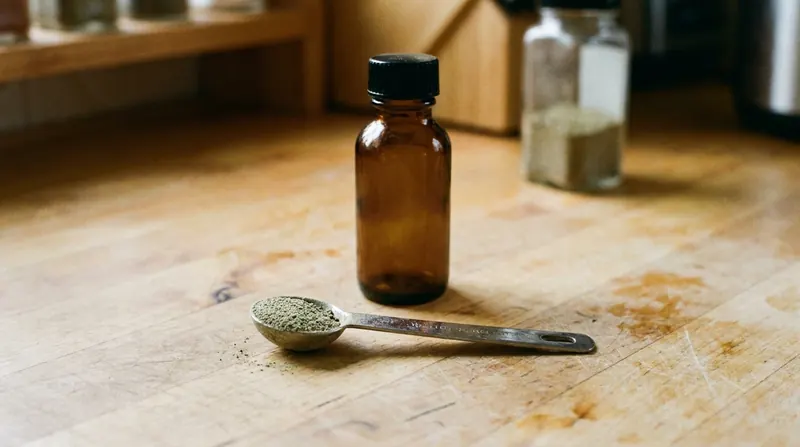
A half teaspoon of dried sage from your own rack weighs more than the dried-herb equivalent of a whole squeeze of this bottle, and that squeeze has five plants in it.
I am not telling you to eat spoonfuls of sage.
A liquid extract and a spoon of ground leaf are not interchangeable, the trial used a standardised extract, and nobody has run a trial on the contents of your spice rack.
But if what drew you to this bottle was sage, the cheapest sage in your house is already in the kitchen cupboard, and it weighs more.
Sage has the best evidence of the five: two trials, one of them in adults averaging 73, at 333 milligrams of extract. The squeeze is made from 91 milligrams of dried herb shared by five plants.
Sum four · The other fourGotu Kola, Ginkgo, Skullcap and Rosemary, Each Beside the Dose That Was Tested
Four plants left, and each of them has been given to people at some dose by somebody. None of those doses is anywhere near a fifth of 91 milligrams.
Gotu kola, first on the panel and probably most of the bottle
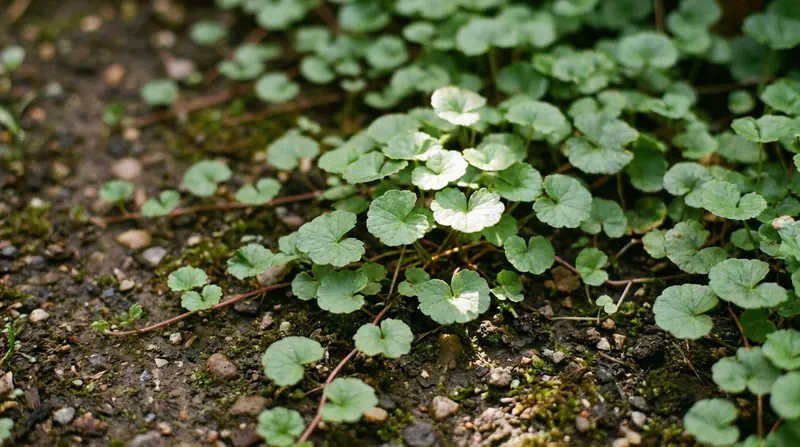
Gotu kola is a low creeping plant with round leaves, eaten as a leaf vegetable in parts of Asia and used in their traditional medicine for a very long time.
It is first in the label's list, so it is probably the largest part of the blend.
Its best trial for a man your age is small.
Twenty-eight healthy older adults took a gotu kola extract for two months, and only the highest dose, 750 milligrams a day, went with better working-memory performance and a higher self-rated sense of alertness. [4]
Twenty-eight people split across several groups is about seven per group, and only the top dose did anything. [4]
A 2017 pooling of the randomised trials of this plant found no significant effect on cognitive test scores overall, and did find the higher self-rated alertness. [5]
Seven hundred and fifty milligrams a day was the dose that moved anything, and the pooled result across trials was nothing for the scores and something for how people said they felt. [4] [5]
Ginkgo, the famous one, and its six-year trial

Ginkgo is the name most people recognise, and it is also the name with the biggest trial behind it, which is not the same as the best news.
In a randomised placebo-controlled trial of 3,069 community-dwelling adults aged 72 to 96 followed for a median of six years, 120 milligrams of ginkgo extract taken twice a day did no better than the placebo on memory, attention, visuospatial ability, language or executive function. [6]
That is 240 milligrams a day of a standardised extract, for six years, in thousands of people, and it came out even. [6]
A smaller twelve-week study of 93 adults aged 55 to 79 taking 120 milligrams a day did find a moderate result on one associational learning task, with no significant difference on any other measure. [7]
The federal centre for complementary health research puts it plainly: there is no conclusive evidence that ginkgo helps any health condition, and it may raise the risk of bleeding in people taking blood thinners. [8]
Two hundred and forty milligrams a day of a standardised extract, and no gain over six years.
A squeeze of this bottle is made from 91 milligrams of dried herb with ginkgo third in the queue.
The bleeding note is the one practical line here, and it belongs to your pharmacist rather than to me. [8]
Skullcap, put in fresh, with a study about how people felt
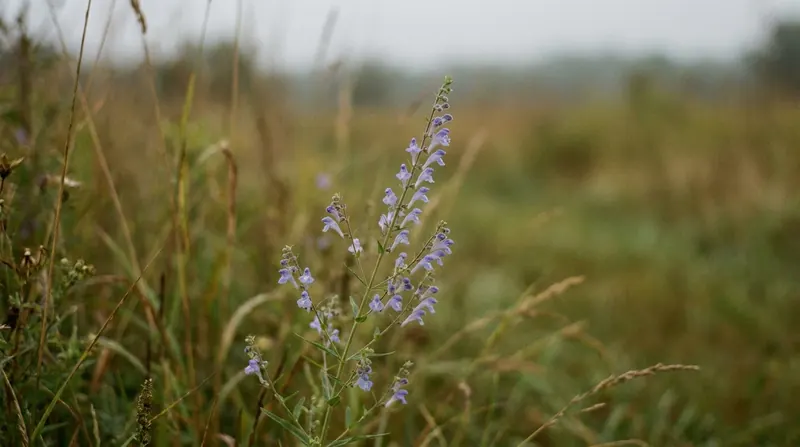
American skullcap is a slender flowering plant, and the label says this one goes in fresh rather than dried.
Its one reasonable human study is not a memory study at all.
Forty-three healthy adults took 350 milligrams three times a day for two weeks, and reported feeling better overall than at the start, with no change at all in self-rated energy or thinking. [9]
Three hundred and fifty milligrams, three times a day, is 1,050 milligrams a day. [9]
That is more than eleven times the dried-herb equivalent of a whole squeeze, for one of five plants, and the thing it moved is not what this bottle is sold for.
Rosemary, where a pinch did better than a handful
Rosemary is last on the panel and, like skullcap, goes in fresh.
Its trial is the strangest and, in its way, the most useful.
Twenty-eight adults averaging seventy-five took single doses of dried rosemary leaf, and 750 milligrams, close to a cooking amount, went with faster speed of memory than the placebo, while 6,000 milligrams went the other way. [10]
More was worse. [10]
That is a rare thing to see written down, and it is the best argument on this page against assuming that a bigger number on a panel is a better number.
Seven hundred and fifty milligrams of dried rosemary is roughly a heaped teaspoon.
A squeeze of this bottle is made from 91 milligrams of dried herb with rosemary last in the queue.
Gotu kola moved something at 750 milligrams a day, [4] ginkgo came out even at 240 a day over six years, [6] skullcap's study used 1,050 a day and measured something else, [9] and rosemary worked at a cooking pinch and not at a handful. [10]
Sum five · The alcoholFifty-Six to Sixty-Six Per Cent Cane Alcohol, and What That Is in a Glass of Water
A liquid extract has to be extracted into something, and in this bottle it is mostly alcohol.
The other ingredients line reads: certified organic cane alcohol at 56 to 66 per cent, distilled water, and certified organic vegetable glycerin.
That is the carrier, and it is the reason the taste is described on the listing as somewhat bitter with a hint of rosemary.
So do that sum too.
A 0.7 millilitre serving at around sixty per cent alcohol is roughly 0.4 millilitres of alcohol, which is a good deal less than a sip of wine.
At three servings a day it is a little over a millilitre.
Diluted into two ounces of water each time, and taken between meals, it is a very small amount by any measure.
Small is not the same as none.
If you avoid alcohol completely, for your own reasons or someone else's, this is an alcohol extract and you should know that before the bottle arrives.
If you are in recovery, this is a conversation for the person who knows your history, not for a page like this one.
And since one of our own advertisements points at an evening drink, here is the honest note in passing.
In 550 British civil servants followed for thirty years, the more a person drank, the faster their word-fluency scores fell, and light drinkers had no edge over those who did not drink at all. [11]
That study is about years of drinking, not about a millilitre in a glass of water.
It is in the ninth sum below, where it belongs, with the rest of what our advertisements point at.
Roughly 0.4 millilitres of cane alcohol per squeeze, diluted into two ounces of water. Tiny, and worth saying out loud rather than discovering.
Sum six · The countTwenty-Three Reviews, Twenty-One With the Purchase Mark, and What They Actually Say
This is a small bottle from a small company, and the review count reflects that.
The maker's own review widget shows 23 reviews with an average of 4.8 stars: twenty at five, two at four and one at three.
Twenty-one of the 23 carry the widget's purchase mark, which is a high share and a low absolute number.
I read all 23 and kept four.
The ones I left out compare the bottle with other formats, mention a health condition or a medicine, or talk about shipping rather than the bottle.
The four below are quoted exactly as they were published on the maker's own page.
They are individual opinions, they are not evidence that the bottle does anything, and the portraits beside them are illustrations rather than the people.

I'm just now beginning to recognize some improvement in my memory (not enough to measure at this time), it's only been a week since I've been taking this supplement, as they do not produce immediate results, effects typically take several weeks with consistent daily use, but I'm hopeful and have experience great results with one other product; the 4 star is my belief that this supplement will soon show more positive effects, I've ordered more to continue, because one bottle won't do it

We are pleased with trying this out. Hoping that the four ounce is available soon. My wife and I are both using this. At 71 and 72, we figure 'what have we got to lose'?

I like to take this before teaching a class to help me feel focused and sharp.

I think it works.
Read the first one again, because it is the most useful review on the page.
She says one bottle will not do it, and the arithmetic in the first sum says she is right: one bottle is a fortnight at three squeezes a day.
Read the last one too.
"I think it works" is four words, and it is an honest four words, and it is also the whole difficulty with reviews of anything you take for memory.
Twenty-three reviews, 21 of them with the purchase mark, averaging 4.8. A high share of a small number, and the most useful line in them is that one bottle is not a trial.
Sum seven · The disagreementsSix Places Where the Store's Listing and the Printed Label Do Not Say the Same Thing
I said at the top that the label on this bottle is more honest than most.
The listing that sells it is a different document, and these are the six places where the two do not line up.
None of them is a scandal.
All of them are the kind of thing a man is entitled to know before he presses a button.
- The gotu kola figure. The listing prints "Gotu Kola aerial parts … 173 mg fresh, 91 mg dry" as though that were the amount of gotu kola in a serving. On the label, those figures are the extraction rate of the whole five-herb blend per 0.7 millilitres. No amount is printed for any single plant anywhere.
- The category word. The listing calls the formula by a word from the brain-supplement category that our own advertising rules do not let us print. The printed label does not use it, and neither will this page.
- The shipping line. The listing says shipping costs nothing above forty-nine dollars. The shipping page limits that to ground shipping inside the continental United States, and a one-ounce bottle does not reach forty-nine dollars on its own.
- The returns line. The listing promises easy returns and assured quality. The written policy is narrower: tell them within thirty days, get a return authorisation number, and receive an exchange or a credit. The policy does not mention money coming back.
- The two towns. The label prints Williams, Oregon, which is the old farm. The contact page gives Central Point, Oregon, which is where the mail goes. Both are real and they are about forty miles apart.
- The supply line. One picture says a bottle is up to a three-week supply and another says to take it up to three times a day. At three a day, 42 servings is fourteen days.
Take the first one seriously, because it is the one that changes what you think you are buying.
If you read the listing and nothing else, you come away believing there are 173 milligrams of gotu kola in a squeeze.
There is no plant in this bottle with a number of its own.
There is one number for five plants, and one equivalence beneath it.
Everything else is an order on a list.
Six disagreements between the listing and the label. The one that matters is the first: the figure the listing gives to gotu kola belongs to the whole blend.
Sum eight · The likelier explanationWhy a Man Reads Better at Nine in the Morning Than at Four in the Afternoon
A page like this owes you the unglamorous part too.
If the thing that brought you here is a name that will not come when you want it, or a sentence you have to start twice, there are cheaper explanations than a missing herb, and most of them are worth checking first.
The first is hearing.
Straining to catch half of what is said in a room, then reconstructing the rest, looks exactly like not remembering it, and it costs you the attention you needed to store it.
The second is what time of day you are asking yourself to perform.
Most people read, write and add up better in the first hours after waking than at the end of a long afternoon, and a bottle does not change that ordering.
The third is water.
In more than a thousand adults aged 60 to 89, measured dehydration went with a steeper drop on a processing-speed test over time, independent of the usual health differences. [12]
A 2021 review of eighteen studies in more than 33,000 older adults found the same thing more cautiously: the evidence linking dehydration to poorer thinking performance is real but sparse. [13]
Two ounces of water, two or three times a day, is what the label tells you to take this extract in.
You could have that glass of water without buying anything at all.
The fourth is the list of things you already take every day.
That one goes to a pharmacist, once a year, with everything in one bag.
Hearing, time of day, water and the annual look at what you already take. Four explanations that cost nothing and are worth checking before the fifth.
Sum nine · The bowl and the cupThe Cereal, the Three Drinks, the Three Foods and the Word Test From Our Own Advertisements
Our advertisements have been saying, in one version or another, that a boxed cereal, three foods and three drinks have something to do with memory, and that there are three words or phrases a man ought to be able to say.
You are owed the honest version, in one place, so here it is.

Start with the bowl.
A frosted, honey-coated or chocolate cereal is mostly refined starch and added sugar, and a serving can carry more sugar than a biscuit.
No cereal ages anyone's brain faster than time does.
Nobody has measured any such thing, and that phrase was written to be clicked.
What the published work says is duller and worth more.
In a Brazilian study of 10,775 adults followed for eight years, the ones who ate the most ultra-processed food lost ground on thinking tests about a quarter faster than the ones who ate the least. [14]
That is an association across a population over years, not a sentence on your breakfast.
The three drinks.
The evening drink in our advertisement is alcohol, and it has the strongest case behind it: in 550 British civil servants followed for thirty years, the more a person drank, the faster their word-fluency scores fell, and light drinkers had no edge over those who did not drink at all. [11]
The second is sugar in a glass: soda, sweetened tea, the tall flavoured coffee from the counter.
Those sit on the same ultra-processed shelf as the sweet cereal, and that is the honest case against them. [14]
The third, in one of our headlines, was coffee.
That was our worst headline, and I will say so in our own advertisement's house.
Plain black coffee and plain tea are not the drinks any of those studies were about.
Keep your coffee.
The three foods.
Processed meat, fried food, and the white-flour shelf: pastries, packaged cakes, white bread.
Our advertisement says to stop eating three things.
The published work says something slower and less satisfying.
In a three-year trial of 604 older adults, one group ate the MIND pattern, which is vegetables, berries, nuts, whole grains, beans, fish and olive oil, and the other ate its usual food with slightly fewer calories; both groups' thinking scores rose by about the same amount. [15]
That is a pattern over years, not a list of three, and even the pattern built for it did not beat plain care with what you eat. [15]
One thing on the plate is worth a line of its own.
In the Framingham families, more than 1,300 adults, the people whose food carried more choline, which is eggs, milk, meat and beans, scored better on verbal and visual memory tests. [16]
Less sugar in the bowl and in the glass.
Less alcohol in the evening.
Keep the coffee.
Eat more like the Mediterranean shelf and less like the vending machine.
The three words, or the three phrases.
There is no such list.
What our advertisement borrowed from is the short, scored mental-status check a clinician gives in person: the date and the place, a few words to hold and give back a minute later, a sum, naming, copying a drawing.
It is read against your age and your schooling by someone trained to do it, and a low score is a reason for a proper look, never a verdict on its own.
Stumbling over a word when you are tired or being timed means nothing by itself.
If the worry behind the click is real, that is fifteen minutes with your own clinician, and it is worth more than anything in this bottle.
And the advertisement about the things some men take every day.
That one sits closest to real published work, and it is the one an advertisement has no business acting on.
Put everything you take in one bag, this bottle included, and take it to the pharmacist.
Ask one question: is anything here a poor fit at my age, and does anything here argue with a ginkgo leaf extract? [8]
So if you clicked on the cereal, here is where it went: onto a counter beside a small amber bottle, where the real answer was always a plainer bowl, a fillet of fish, and the coffee you already had.
Sum ten · What it isn'tSix Things a Squeeze of This Won't Do
- It won't come with a trial of itself. No study has ever tested this blend of five plants in this liquid, in anybody.
- It won't bring any of its five plants to the dose of its own trial. The whole squeeze is made from 91 milligrams of dried herb.
- It won't tell you how much sage, ginkgo or gotu kola you took. There is one number for five plants and an order on a list.
- It won't last three weeks at three squeezes a day. Forty-two servings is fourteen days at that rate.
- It won't come back as money if you send it back. The written policy offers an exchange or a credit within thirty days, with an authorisation number.
- It won't act on any condition a clinician has named. It is a dietary supplement, and its label carries the sentence that says so.
If that list annoys you, I would rather you were annoyed now than on the fourteenth morning with an empty bottle and no idea what you took.
Sum eleven · The routineIf You Do Buy It: One Bottle, Two Weeks, Two Ounces of Water and One Line a Day
If you are going to try it, try it as a test with a date on it.
- Buy one bottle of one ounce. Two weeks at three squeezes a day is what it is, and two weeks is a fair look.
- Take it to the pharmacist first, with everything else you take, and name the ginkgo leaf out loud. [8]
- Shake it well each time. It is a blend of five plant extracts in alcohol and water, and it settles.
- One squeeze in two ounces of water, between meals, two or three times a day. The label's own shape, not mine.
- Drink the water. That glass is the part of this routine with the least argument against it. [12]
- Write one line a day in a notebook. Not "sharper" or "foggier," but what you were doing at ten in the morning and how it went.
- On the fifteenth morning, read your fourteen lines beside the fortnight before. That is the only trial of this bottle you will ever get.

Look at that list the way I do.
Six of the seven things on it cost nothing at all.
This is worth a look if:
- You like the idea of five certified-organic plants in a single bottle from a farm that has been doing this since the 1970s.
- You have read the arithmetic above and want the bottle anyway, with your eyes open.
- You will take it to the pharmacist first and name the ginkgo.
- You will give it a fortnight, in water, between meals, and write your lines.
Give it a miss if:
- You avoid alcohol completely. This is a cane-alcohol extract at 56 to 66 per cent.
- You take a blood thinner or anything the pharmacist flags against ginkgo leaf. [8]
- You wanted the dose of a trial. No plant in this bottle reaches a fifth of one.
- You wanted your money back rather than a credit if it does not suit you. The written policy offers an exchange or a credit.
Sum twelve · Where it's soldFrom Southern Oregon, by UPS, With a Thirty-Day Credit and a Shipping Threshold You Won't Reach
The bottle is sold on the maker's own site, and that is the only place this page links to.
Herb Pharm, LLC is in Central Point, Oregon, with a farm at Williams in the same state, and it publishes a street address, two telephone numbers and an email address.
Its phone line answers on weekdays from seven in the morning to half past four, Pacific time.
Orders go out in about three business days and arrive by UPS in three to eight days overall, inside the continental United States plus Hawaii and Alaska; the policy lists no international shipping.
Shipping costs nothing above forty-nine dollars, by ground, inside the continental states, and one one-ounce bottle will not reach that threshold on its own.
The returns policy is the part to read before you buy rather than after.
Tell them within thirty days of purchase, get a return authorisation number, and you receive a full credit; the policy describes an exchange or a credit and does not mention money coming back.
Damage is reported immediately and a short order within seven days, and anyone who starts three or more returns is dropped from the points programme.
The price is the one on the maker's listing on the day you look, and this page prints none.
Buy one bottle.
A fortnight is a test, and the pharmacist comes first.
One number for five plants. Now you know which number it is.
Every plant on this panel, with its plain English name, what it is, the trial that tested it and at what dose, is written out in the ingredient and advertising guide linked at the foot of this page.
The guide also explains the extraction rate in full, sets out which of our own headlines this bottle does and does not support, and lists every source cited here.
Where to get it
A certified-organic liquid extract of five herbs (gotu kola, ginkgo, skullcap, sage and rosemary) in cane alcohol, water and glycerin, taken as one squeeze of the bulb in two ounces of water, two or three times a day.
CHECK AVAILABILITYSold by Herb Pharm, LLC, Central Point, Oregon · one fluid ounce, up to 42 servings · one squeeze in two ounces of water, two or three times a day, between meals · certified organic, 56-66% cane alcohol
QuestionsWhat Readers Ask Me Before Their First Bottle
Questions readers ask
How much of each herb is in it?
Nobody outside the company knows. The panel prints one figure for the whole blend, 646 milligrams per 0.7 millilitre serving, and one equivalence: 173 milligrams of fresh herb and 91 milligrams of dried herb.
The five plants are listed in order, which by convention puts gotu kola largest and rosemary smallest, and that is the only clue there is.
Is the 173 milligram figure the amount of gotu kola?
No, and this is the single most common misreading of this product. On the label those figures are the extraction rate of the whole five-herb blend per serving; the store's listing prints them beside the gotu kola line, which makes them look like a single plant's amount.
How long does one bottle last?
Fourteen days at three squeezes a day, twenty-one at two. The bottle holds up to 42 servings of 0.7 millilitres, and one of the maker's own pictures calls it a three-week supply while another says to take it up to three times a day.
Which ingredient has the best evidence?
Sage. Twenty adults averaging seventy-three took 333 milligrams of a standardised sage extract and did better on memory and attention tasks across the day than on placebo, [1] and thirty young adults did better on a multitasking battery after 600 milligrams of dried leaf. [2]
Both were single doses, both were small, and both used far more sage than a squeeze of this bottle can contain.
How does that compare with the sage in my kitchen?
A level teaspoon of ground sage weighs 0.7 grams by the United States Department of Agriculture's tables, so half a teaspoon is 350 milligrams. [3] A whole squeeze of this bottle is made from 91 milligrams of dried herb, shared by five plants.
They are not interchangeable: an extract and a ground leaf behave differently, and the trial used a standardised extract. The weights are still the weights.
Does it contain alcohol?
Yes. Certified organic cane alcohol at 56 to 66 per cent, with distilled water and vegetable glycerin.
A 0.7 millilitre serving carries roughly 0.4 millilitres of alcohol, diluted into two ounces of water. That is far less than a sip of wine, and it is still alcohol.
Is ginkgo in here a problem with anything I take?
That is a question for your pharmacist, and it is the reason to take the bottle in before the first squeeze. The federal centre for complementary health research notes that ginkgo may raise the risk of bleeding in people taking blood thinners. [8]
What did the big ginkgo trial find?
In 3,069 adults aged 72 to 96 followed for a median of six years, 240 milligrams a day of ginkgo extract did no better than placebo on memory, attention, visuospatial ability, language or executive function. [6]
Can I get my money back if it doesn't suit me?
The written policy offers an exchange or a full credit if you tell them within thirty days and get a return authorisation number. It does not describe money coming back, and three or more returns take you out of the points programme.
Your advertisement was about a cereal, or three foods, or three drinks. Where is that on this page?
In the ninth sum, in full, with the studies. The short version: less sugar in the bowl and in the glass, less alcohol in the evening, keep your plain coffee, and eat more like the Mediterranean shelf.
None of it is in the bottle, and the ingredient and advertising guide at the foot goes through every headline we run.
Your advertisement said something about three phrases, or spelling three words. Is there a test I can take?
Not on a screen. The words and phrases come from the short mental-status check a clinician gives in person, read against your age and your schooling.
If the worry behind the click is real, ask your own clinician for the proper check. It takes about fifteen minutes.
The short versionEverything Above, in Sixty Seconds
- A one-ounce amber bottle of a certified-organic liquid extract of five plants, made by Herb Pharm of Central Point, Oregon, taken as one squeeze of the bulb in two ounces of water, two or three times a day, between meals.
- One squeeze is 0.7 millilitres and 646 milligrams of extract blend, made from 91 milligrams of dried herb, shared by five plants. No plant has a number of its own.
- Sage has the best evidence: 333 milligrams of extract in 20 adults averaging 73, [1] and 600 milligrams of dried leaf in 30 young adults. [2] Half a teaspoon from your spice rack weighs 350 milligrams. [3]
- Gotu kola moved something only at 750 milligrams a day in 28 people, [4] and the pooled trials found nothing for test scores. [5]
- Ginkgo came out even at 240 milligrams a day over six years in 3,069 adults, [6] and may raise bleeding risk with blood thinners. [8]
- Skullcap's study used 1,050 milligrams a day and measured how people felt, not how they scored. [9] Rosemary worked at a cooking pinch of 750 milligrams and not at 6,000. [10]
- Roughly 0.4 millilitres of cane alcohol per squeeze, diluted into water.
- Forty-two servings to the bottle: fourteen days at three a day, not the three weeks one picture claims.
- Twenty-three reviews averaging 4.8, twenty-one with the purchase mark, and the most useful of them says one bottle won't do it.
- Six disagreements between the listing and the label, beginning with the extraction rate printed as if it were the gotu kola amount.
- The cereal, three drinks, three foods and the word test from our own advertisements, in the ninth sum: less sugar, less alcohol, keep the coffee, and no test on a screen.
The last sumWhat One Squeeze Is Actually Worth
Here is the whole thing in one breath.
A certified-organic extract of five plants from an Oregon farm, honestly labelled, with one number where most panels print five and one line of equivalence that tells you the truth if you read it.
Ninety-one milligrams of dried herb per squeeze, divided five ways, against trials that used three hundred, seven hundred and fifty, and a thousand.
One of those five plants, sage, has been given to men and women your age and measured, twice.
And half a teaspoon of it from your own cupboard weighs more than the whole squeeze.
If you are a man who wants a tidy, certified-organic, plainly-labelled bottle of five old plants, and who will read the label rather than the listing, this is a decent one.
Not because it reaches a trial dose. It does not.
Because you will know exactly what a squeeze is, exactly what it is made from, and exactly how far each of its five plants sits from the study behind it.
Buy one bottle, take it to the pharmacist before the first squeeze, drink the two ounces of water with it, give it a fortnight and write one line a day. Fourteen lines in a notebook will tell you more about your own mornings than this page can.
Check the current price and availability
A certified-organic liquid extract of five herbs (gotu kola, ginkgo, skullcap, sage and rosemary) in cane alcohol, water and glycerin, taken as one squeeze of the bulb in two ounces of water, two or three times a day.
CHECK AVAILABILITYHerb Pharm, LLC, Central Point, Oregon · certified organic, made in the United States · one fluid ounce, up to 42 servings · shake well, one squeeze in two ounces of water, between meals
P.S. If you take one thing from this page, take two numbers.
Six hundred and forty-six milligrams of extract in a squeeze, and ninety-one milligrams of dried herb behind it.
Everything else on the panel is an order on a list.
P.P.S. If the word that will not come has been happening for a year, and it happens before the coffee as well as after it, talk to your own clinician before you buy anything at all.
A one-ounce bottle was never going to answer a question that a clinician answers in fifteen minutes.